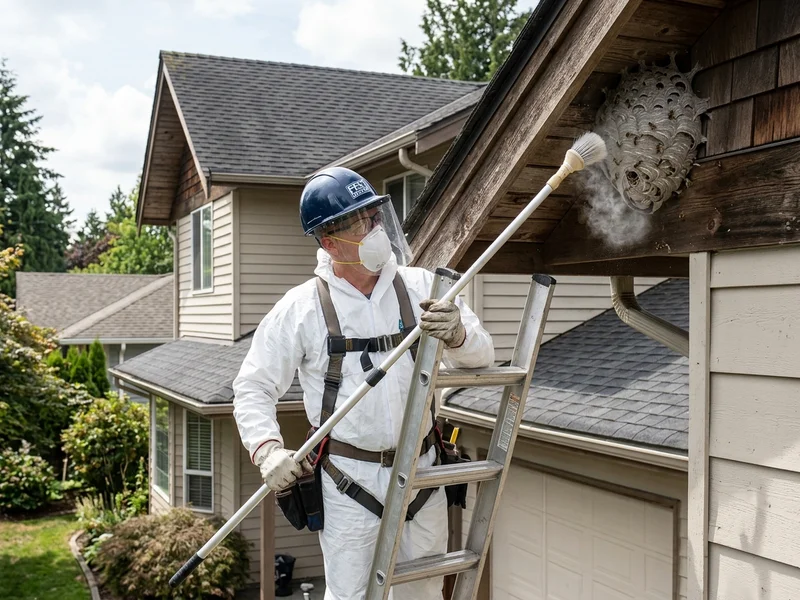
Professional Protocol for Wasp & Yellowjacket Nest Removal
Yellowjackets and paper wasps frequently establish concealed nesting sites in high-traffic residential areas, including beneath lawn sod, inside hollow fence posts, and across porch overhangs. Unlike solitary insects, social wasps coordinate fierce defensive attacks when their flight corridor is breached.
Lawn mowers and weed trimmers trigger catastrophic underground swarms because engine vibrations mimic predatory digging. Specialized extermination applies pressurized residual dusts directly into subterranean tunnel networks, extinguishing the subterranean comb permanently.
Warning Signs on Property:
- Steady stream of yellowjackets entering and exiting a tiny hole in the lawn turf
- Open umbrella-shaped paper combs hanging beneath porch railings or deck joists
- Aggressive stinging insects swarming outdoor dining tables and trash bins
- Insects disappearing behind exterior brick weep holes or vinyl siding gaps
Frequently Asked Questions About Wasp & Yellowjacket Nest Removal
Fertilized queens seek out abandoned rodent burrows and natural soil fissures in spring, excavating extensive subterranean chambers that expand to thousands of cells.
Technicians observe flight corridors from a safe distance, identifying the primary aperture where workers line up to enter before approaching in full protective gear.
Retail surface sprays merely irritate the entrance sentries, leaving the deep subterranean brood comb thirty inches underground completely untouched.
Blade vibrations cause hundreds of defensive workers to erupt from the turf simultaneously, stinging the operator repeatedly within seconds.
Paper wasps are less aggressive than yellowjackets but will sting fiercely if someone approaches within two feet of their open eave comb.
Scraping away the paper comb and treating the wooden surface with repellent barriers removes attachment pheromones that attract future queens.
Subterranean combs commonly sit between six inches and three feet beneath the turf, following irregular root lines and abandoned mole tunnels.
Colony populations peak just as natural nectar sources decline, forcing stressed workers to search aggressively for sweet liquids and meat protein.
Need Wasp & Yellowjacket Nest Removal Right Now?
Do not wait for swarming hornets to attack family members or pets. Contact our dispatch team now for emergency hornet removal.
877-823-8715 — Request Eradication